NASA-Licensed · Organ-on-a-Chip

Predict human drug toxicity
before it costs you a trial.

AccuCell's 3D-bioprinted organ-on-a-chip delivers standardized, human-relevant data on metabolism- and clearance-driven toxicity. Rule out the wrong candidates early and advance the right ones with confidence.

A new standard for preclinical toxicity testing.

AccuCell Biotechnology is a company built on NASA technology. We translate that foundation into a ready-to-use organ-on-a-chip device that gives drug developers what cell culture assays and animal models cannot: reproducible, standardized, human-relevant insight into how a drug candidate is metabolized and cleared, at the stage where decisions are cheapest to make.

Drug development is failing, and failing late.

Failure is often driven by poor prediction of human metabolism and clearance during preclinical testing. Current models fail to accurately predict how drugs behave in the human body, producing late-stage failures that cost billions and delay life-saving therapies.

0
Clinical trial failure rate
Candidates that fail despite preclinical success
10–15
Years to market
Average time to develop one approved drug
$1B+
Cost per drug
Total investment to bring one drug to market

Cause of failure breakdown

40–50%Lack of efficacy
30%Unmanageable toxicity AccuCell targets this
10–15%Poor drug-like properties
~5%Other

AccuCell directly targets the ~30% of clinical failures driven by unmanageable toxicity, the metabolism- and clearance-derived failures our platform is built to catch early.

Source: [add citation, e.g. author, journal, year]

A 3D-bioprinted liver and kidney organ-on-a-chip.

Our platform integrates human primary liver and kidney cells in a bioprinted matrix, creating a perfused, human-relevant microenvironment, a compact system engineered to model how the body actually processes a drug. By recreating the metabolism and clearance axis that drives toxicity failures, it surfaces human-specific risk signals at the earliest preclinical stage.

Standardized through 3D bioprinting

Unlike a manual setup that varies run to run, 3D bioprinting builds the same precise tissue architecture every time, on every device, the source of true reproducibility.

Human-relevant by design

Primary human liver and kidney tissue in a living, perfused environment.

Built for clearance and metabolism

Targets the exact failure mode that animal models miss.

Earlier answers. Better decisions. Lower risk.

AccuCell gives drug developers and the labs that serve them a faster, more predictive read on candidate safety, before costly IND-enabling studies or clinical trials. The result is fewer expensive late-stage failures, more confident go/no-go calls, and a development path grounded in human-relevant data instead of imperfect proxies.

Detect toxicity early

Catch metabolism- and clearance-driven toxicity at the earliest preclinical stage.

Reduce animal reliance

Human-relevant data that supports modern regulatory expectations (NAMs).

Fits your workflow

Standardized format slots directly into existing screening pipelines.

Confident decisions

Reliable, repeatable results you can stake a go/no-go call on.

Not another chip. A standardized, ready-to-use system.

01

3D-bioprinted primary-cell tissue

Living human tissue architecture, not flat monolayers.

02

Standardized and reproducible

3D bioprinting builds the same precise structure every time, which is what makes results reliable run after run.

03

Built for early toxicity detection

Purpose-designed around the metabolism and clearance failure mode.

04

NASA-licensed foundation

Organ-on-a-chip technology licensed from the NASA Technology Transfer Program.

Where existing systems trade off standardization, throughput, or tissue fidelity, AccuCell is designed to deliver all three.

The regulatory shift toward New Approach Methodologies.

The ground is moving under preclinical testing. Regulators are actively encouraging New Approach Methodologies (NAMs) that reduce reliance on animal models and prioritize human-relevant data. Organ-on-a-chip technology has matured from research curiosity into a deployable tool, and AccuCell is built for exactly this moment. As the industry moves toward human-relevant testing, a standardized, reproducible device becomes not just useful but expected.

2022 · U.S. Public Law

FDA Modernization Act 2.0

Authorized the use of non-animal New Approach Methodologies, including organ-on-a-chip systems, to support drug applications, ending the blanket animal-testing requirement.

Regulatory direction

The push for NAM adoption

Agencies are actively encouraging human-relevant models that better predict clinical outcomes, exactly the data AccuCell is built to deliver.

Backed by NASA technology and market validation.

NASA Technology Transfer license
1st place · Startup Texas SBIR/STTR Competition
Regional NSF I-Corps Graduate

Built to translate advanced technology into a commercial product.

Ethan Atlan Sabido

Ethan Atlan Sabido

Founder & CEO

Founder of AccuCell and the driving force behind its NASA-licensed technology. Holds a B.S. in Biotechnology (Licenciatura en Biotecnología) and a Master's in Excelencia Directiva y Visión Global. Focused on translating breakthrough science into deployable tools for drug developers.

Jane Lea Hicks

Jane Lea Hicks

Business Development Advisor

Bio pending confirmation before publishing.
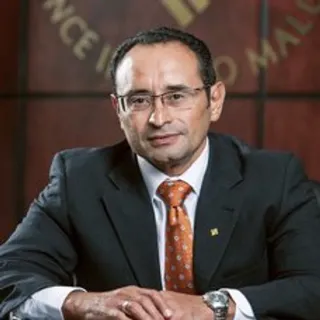
Dr. Narciso Acuña

Dr. Narciso Acuña

Strategic & R&D Advisor

Bio pending confirmation before publishing.

Let's talk.

Whether you're a CRO, a drug developer, a potential partner, or an investor, we'd like to hear from you.